Quantitative sensory testing
When the nerve conduction study is normal and the patient still cannot bear a bedsheet, this is the test that measures it.
Quantitative sensory testing applies calibrated thermal and mechanical stimuli and records the threshold at which sensation and pain begin, against published reference values. It documents a nervous system whose gain has changed — the thing electrodiagnostics cannot see.
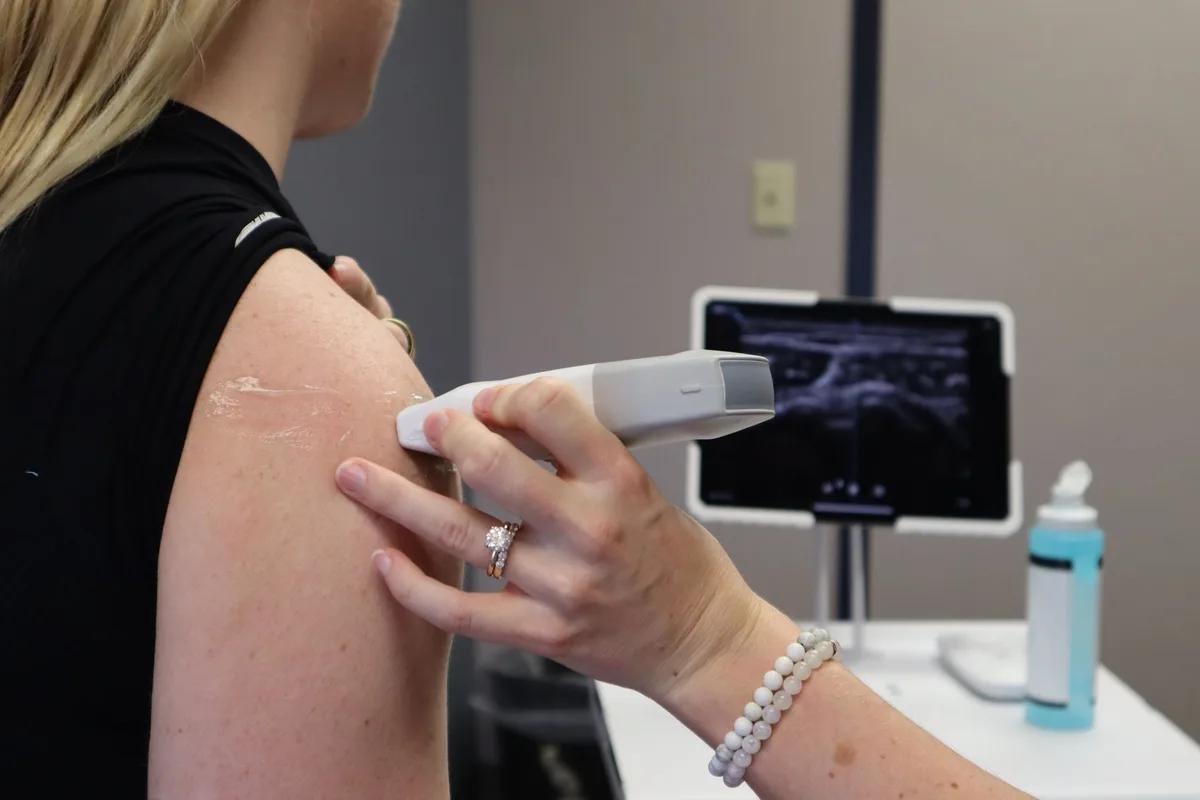
What it is
Rolke and colleagues published the standardized protocol and reference values used by the German Research Network on Neuropathic Pain, covering thermal and mechanical detection and pain thresholds. Having published reference values is what makes a result interpretable rather than anecdotal.
Findings such as allodynia — pain from a stimulus that should not hurt — and hyperalgesia become numbers with a comparison range attached.
Why it matters in an injury case
A patient with normal imaging and a normal electrodiagnostic study, describing burning pain and intolerance of light touch, is the classic profile that gets framed as exaggeration. Sensory testing is the answer to that framing, because it is the measurement of exactly that phenomenon.
It also supports the central sensitization picture, and is part of the CRPS assessment alongside the Budapest criteria — see CRPS.
Its limits, plainly
- It requires patient cooperation, so it is not immune to effort. That is why it is read alongside tests that are not — see effort and validity testing.
- It shows a sensory abnormality, not its cause.
- It does not date an injury.
This practice is not aligned to a side. Its obligation runs to the patient’s health and safety, which is the same reason it is not beholden to any position that would keep it from seeing what is actually there. We do not offer opinions on liability, we do not accept a referral or a review conditioned on reaching a particular conclusion, and we will say plainly when the evidence does not support the claim — whichever party was hoping otherwise.
Common questions
Is this the same as a nerve conduction study?
No. Electrodiagnostics measure large-fiber conduction. Sensory testing measures perceptual thresholds, including small-fiber function that electrodiagnostics do not sample.
Can a patient fake the result?
Thresholds require cooperation, so the protocol includes internal consistency checks and the result is read with the rest of the picture rather than alone.
Does an abnormal result prove the injury caused it?
No. It documents the current state of the sensory system. Causation rests on timing and mechanism.
Is it uncomfortable?
It involves brief thermal and mechanical stimuli up to a threshold the patient controls. It is not a pain-tolerance contest.
Related reading
- Central sensitization
- Objective corroboration
- EMG and nerve conduction
- CRPS / RSD
- Effort and validity testing
Ask whether sensory testing fits this patient
It is the right test for a specific presentation and the wrong one for most others. We will tell you which this is.
12166 Natural Bridge Rd
St. Louis, MO 63044
Monday to Friday, 8:00 a.m. to 5:00 p.m. Nothing on this page is legal advice, and nothing on it is medical advice.
Sources
- Rolke R et al. Quantitative sensory testing in the German Research Network on Neuropathic Pain (DFNS): standardized protocol and reference values. Pain, 2006. PubMed 16697110
- Woolf CJ. Central sensitization: implications for the diagnosis and treatment of pain. Pain, 2011. PubMed 20961685
- Harden RN et al. Validation of proposed diagnostic criteria (the “Budapest Criteria”) for complex regional pain syndrome. Pain, 2010. PubMed 20493633
- Raja SN et al. The revised International Association for the Study of Pain definition of pain: concepts, challenges, and compromises. Pain, 2020. PubMed 32694387