Inflammatory and metabolic markers
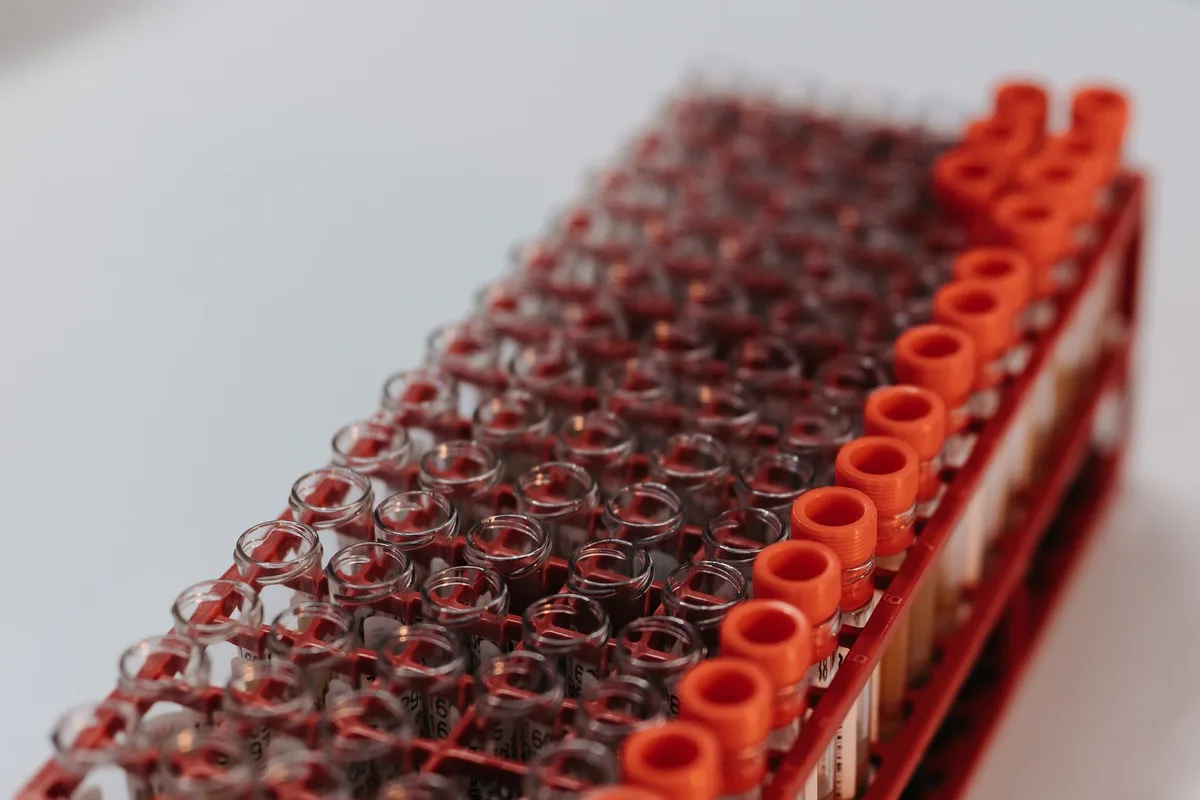
One blood draw turns the terrain argument from an assertion into something the other side can check.
The metabolic state a body was in before an injury is measurable. It is drawn at an ordinary visit, for ordinary clinical reasons, and it produces numbers with reference ranges — which is exactly what an argument about recovery course needs underneath it.
What is measured, and why each one is there
- Fasting glucose and insulin — insulin resistance is the central metabolic variable, and fasting insulin is frequently the first thing to move.
- Hemoglobin A1c — the medium-term glucose picture.
- Lipid panel including triglycerides and HDL — two of the components of the standard metabolic criteria.
- High-sensitivity CRP — a marker of the low-grade systemic inflammation that accompanies metabolic dysfunction.
- Waist circumference and blood pressure — measured at the visit, and part of the same published criteria.
These are the components national analyses use to define optimal metabolic health — the criteria behind the under 7% figure.
Why it is ordered clinically, not forensically
Because it changes treatment. A body that will not resolve inflammation does not hold a procedural result, and the metabolic side is treated alongside the structural one. That is also the answer to the obvious cross-examination: this panel is drawn on patients who are not in litigation, for the same reason.
Where the panel is unremarkable, the terrain argument is dropped rather than stretched.
This practice is not aligned to a side. Its obligation runs to the patient’s health and safety, which is the same reason it is not beholden to any position that would keep it from seeing what is actually there. We do not offer opinions on liability, we do not accept a referral or a review conditioned on reaching a particular conclusion, and we will say plainly when the evidence does not support the claim — whichever party was hoping otherwise.
What it does not do
It does not establish that the injury caused the pain, and it does not establish that metabolic dysfunction caused the pain. It supports a statement about course — why this recovery ran longer than a population average predicts — and that is the only claim built on it here. See metabolic dysfunction and injury.
Common questions
Is a normal-weight client likely to be normal on this panel?
Not reliably. Metabolic dysfunction is not the same as visible weight, and a substantial share of adults at a normal body mass index fail metabolic criteria.
Does the panel need to be fasting?
Fasting glucose and insulin do, and the interpretation says so. A non-fasting draw limits what can be concluded and the report states that.
Can these results be used against the patient?
They support an argument that the pain would have come anyway. Timing and documented functional change answer that — see causation and apportionment.
How soon after an injury is it useful?
Any time. These markers describe a chronic state rather than an acute one, which is precisely why they speak to the pre-injury terrain.
Related reading
- What terrain means
- Metabolic dysfunction and injury
- The population numbers
- Objective corroboration
- Future care and life-care plans
One visit, one draw
The terrain either supports the recovery course or it does not, and we will tell you which before it is in a report.
12166 Natural Bridge Rd
St. Louis, MO 63044
Monday to Friday, 8:00 a.m. to 5:00 p.m. Nothing on this page is legal advice, and nothing on it is medical advice.
Sources
- Araújo J, Cai J, Stevens J. Prevalence of optimal metabolic health in American adults: NHANES 2009–2016. Metabolic Syndrome and Related Disorders, 2019. PubMed 30484738
- O’Hearn M et al. Trends and disparities in cardiometabolic health among U.S. adults, 1999–2018. Journal of the American College of Cardiology, 2022. PubMed 35798448
- Okifuji A, Hare BD. The association between chronic pain and obesity. Journal of Pain Research, 2015. PubMed 26203274
- Rikard SM et al. Chronic pain among adults — United States, 2019–2021. MMWR, 2023. PubMed 37053114