Effort and validity testing
The responding party will raise effort whether or not there is a reason to. It is better to have measured it.
Validity and effort measures exist because self-report alone cannot be verified. They are frequently misused as lie detectors, which they are not. Understanding precisely what they detect is what lets either side use them rather than only be ambushed by them.
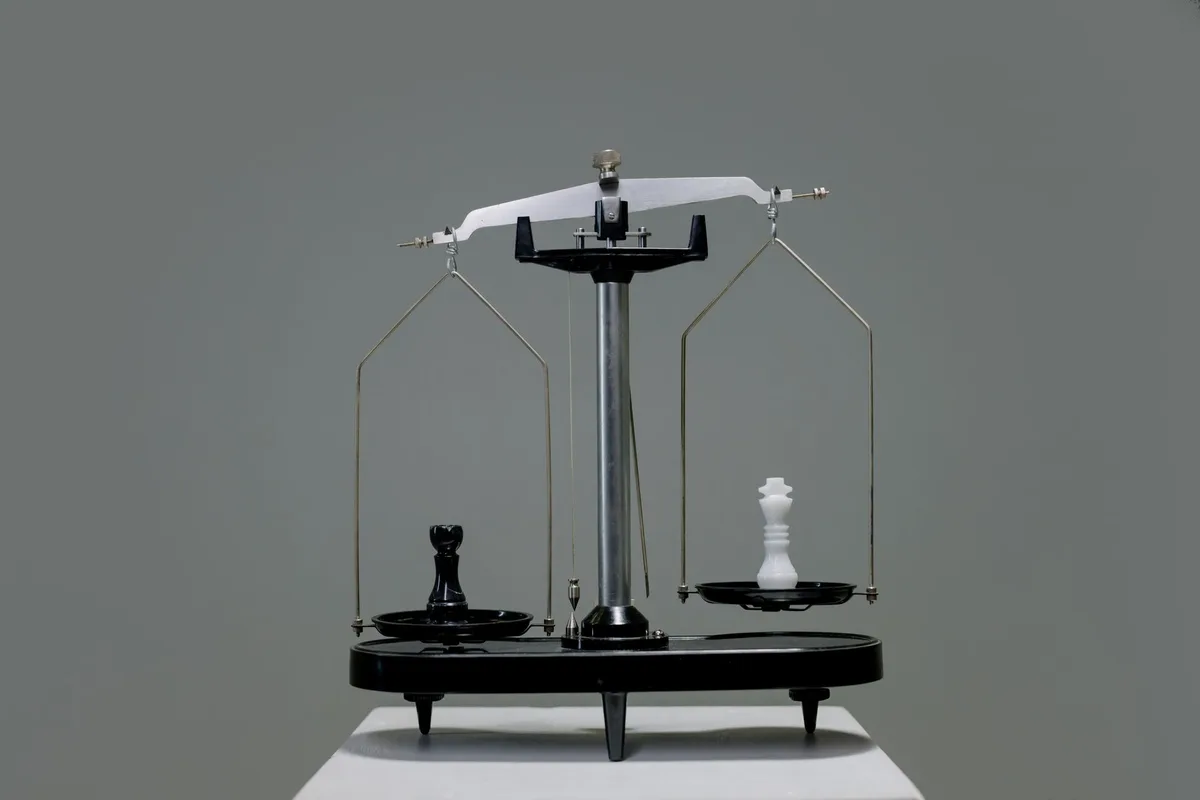
What these measures actually detect
Performance validity measures detect performance below what a genuine impairment would produce — a result too poor to be real. Symptom validity measures detect endorsement patterns that differ from those of people with the condition being claimed.
Johnson-Greene and colleagues examined the relationship between performance validity testing, disability status and somatic complaints, which is the relevant context: these measures operate in populations where disability claims are common, and that context has to be part of the interpretation.
Neither type detects lying. They detect a pattern, and a pattern has more than one explanation.
Why either side might want them
Because the question is coming regardless. A patient with documented valid effort and reduced capacity is in a materially clearer position than one whose effort was never assessed — and a party relying on a failed measure is on firmer ground when the measure was administered properly and interpreted with its limits stated.
It also disciplines the rest of the file. Findings that survive a validity check are findings worth relying on.
The misuse to expect
A FAILED VALIDITY MEASURE IS NOT A FINDING OF MALINGERING
Malingering is intentional fabrication for external gain. A validity measure cannot establish intent. Pain itself, medication, fatigue, poor sleep, depression, low education and fear of re-injury all affect performance, and a report that leaps from one number to an accusation has exceeded its instrument.
This practice is not aligned to a side. Its obligation runs to the patient’s health and safety, which is the same reason it is not beholden to any position that would keep it from seeing what is actually there. We do not offer opinions on liability, we do not accept a referral or a review conditioned on reaching a particular conclusion, and we will say plainly when the evidence does not support the claim — whichever party was hoping otherwise.
Common questions
Should a client be tested if there is any doubt?
That is your call. What we will not do is order a test and then decline to report the result.
Can pain itself cause a failed effort measure?
Yes, along with fatigue, medication and fear of re-injury. That is why the finding is interpreted in context.
Does passing validity testing prove the pain is real?
No. It removes one line of attack. Pain is corroborated by the generator, not by an effort score — see objective corroboration.
Do you perform this testing?
Interpretation and referral, yes. The neuropsychological measures themselves are performed by the appropriate specialist.
Related reading
- Functional capacity
- Reading an independent examination
- Objective corroboration
- Records that survive cross
- Central sensitization
Decide about validity testing early
It is far more useful obtained on your own initiative than produced against you on examination.
12166 Natural Bridge Rd
St. Louis, MO 63044
Monday to Friday, 8:00 a.m. to 5:00 p.m. Nothing on this page is legal advice, and nothing on it is medical advice.
Sources
- Johnson-Greene D et al. Relationship between performance validity testing, disability status, and somatic complaints. The Clinical Neuropsychologist, 2013. PubMed 23121595
- Bühne D et al. Do patient characteristics affect the predictive validity of functional capacity evaluation performance? International Archives of Occupational and Environmental Health, 2022. PubMed 34709439
- Raja SN et al. The revised International Association for the Study of Pain definition of pain: concepts, challenges, and compromises. Pain, 2020. PubMed 32694387
- Woolf CJ. Central sensitization: implications for the diagnosis and treatment of pain. Pain, 2011. PubMed 20961685