PRP and BMAC in injury cases
A treatment the patient’s plan will not pay for, that six professional societies have written practice guidelines about.
Platelet-rich plasma and bone marrow aspirate concentrate are established interventional procedures with society consensus guidelines behind them and, for most patients, no insurance coverage at all. Those two facts sit side by side without contradiction, and the gap between them is where a great deal of confusion enters an injury case.
What are orthobiologics?
Orthobiologics use the patient’s own tissue to alter the biological environment of an injured structure rather than simply to suppress the pain signal coming out of it.
PLATELET-RICH PLASMA (PRP)
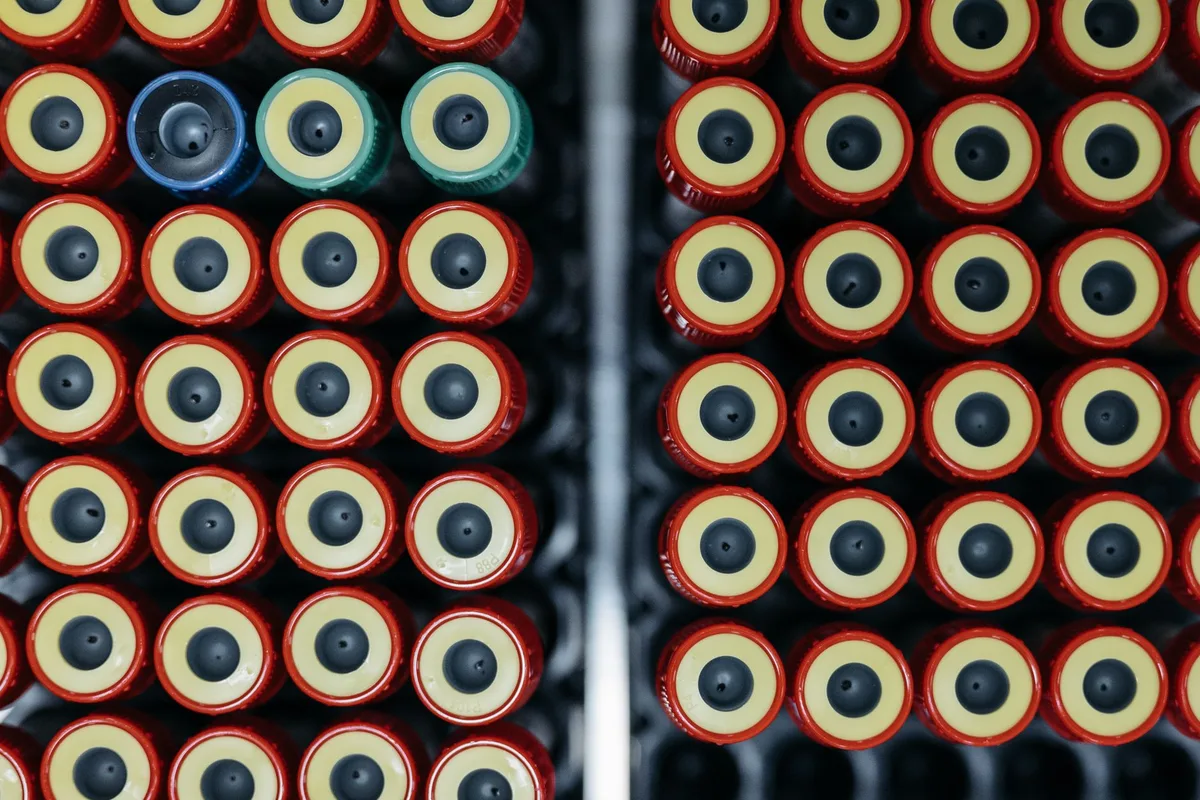
Blood is drawn from the patient, spun in a centrifuge to concentrate the platelet fraction, and injected under image guidance into a joint, tendon or spinal structure. The preparation systems are cleared medical devices and the material is the patient’s own blood, processed and returned in the same encounter.
BONE MARROW ASPIRATE CONCENTRATE (BMAC)
Marrow is aspirated, most often from the iliac crest, concentrated, and delivered to the target under image guidance. Same principle, different starting tissue, and a more involved procedure.
Both are performed the same way any other image-guided injection is performed in this practice, with the same fluoroscopic or ultrasound confirmation and the same procedure documentation. See objective corroboration for how that documentation is built.
Why do orthobiologics show up in injury cases?
Orthobiologics show up in injury files for three reasons, and each one creates a different problem.
- The client had one and paid out of pocket. There is now a real, incurred expense with no insurance trail, which the responding party will characterize as elective.
- The treatment is indicated and the patient cannot afford it. It belongs in future care, and it will be argued that a treatment no insurer funds cannot be reasonable and necessary.
- The client declined it, and failure to mitigate is argued — for declining something they were never going to be able to pay for.
In all three the argument runs through the same claim: if it worked, insurance would cover it. That claim is not true, and it is not a close question. See coverage is not evidence.
Do orthobiologics really work, and for which injuries?
The evidence is not uniform across the body, and the copy on this site does not pretend otherwise. The strength of the recommendation depends entirely on the indication.
- Knee osteoarthritis — the strongest position, with formal consensus statements from ESSKA-ICRS and ESSKA-ORBIT, an AAPM&R guidance statement, AAOS appraisal, and meta-analyses of randomized trials.
- Lateral epicondylitis and Achilles tendinopathy — supported by meta-analyses of randomized trials, with better long-term functional results than the comparators studied.
- Chronic low back pain — ASIPP’s 2025 practice guideline grades intradiscal and epidural PRP at Level III with moderate consensus recommendations, and sacroiliac PRP lower. That is a real recommendation at a modest evidence level, and it should be quoted at that level, not above it.
- Hip osteoarthritis and Achilles tendinopathy — where current evidence does not support benefit, and we say so. Rotator cuff has moved the other way since 2023 and now carries a Level I analysis favoring PRP over corticosteroid. Detail on what the evidence actually says.
A knee citation does not do a sacroiliac page’s work, and any expert who uses it that way should expect to be taken apart for it.
One more filter matters as much as indication: whether the study reported what it injected. Platelet dose and leukocyte content change outcomes, and much of the older literature reported neither — see dose and preparation.
When does this practice offer orthobiologics?
Orthobiologics are offered in selected situations, after a pain generator has been identified, as one option among several — not as a signature service and not as a first move. They are not offered as a cure, and no outcome is promised.
This practice is not aligned to a side. Its obligation runs to the patient’s health and safety, which is the same reason it is not beholden to any position that would keep it from seeing what is actually there. We do not offer opinions on liability, we do not accept a referral or a review conditioned on reaching a particular conclusion, and we will say plainly when the evidence does not support the claim — whichever party was hoping otherwise.
Frequently asked questions
Is PRP approved by the FDA?
PRP is the patient’s own blood, processed and returned in the same encounter, and the preparation systems are cleared medical devices. It is established medical practice performed under image guidance, not a trial protocol.
Why would a plan not pay for something with practice guidelines behind it?
Because a coverage decision is a budgeting decision made by a payer about what it funds across its whole membership, on different criteria and by different people than a professional society uses. That distinction is the subject of coverage is not evidence.
Does the practice recommend orthobiologics for everyone?
No. They are used in selected situations after the pain generator is confirmed, usually by a diagnostic block, and there are indications where the evidence argues against them.
How does this affect a damages figure?
A non-covered but indicated treatment is a future-care item that has to be priced as an out-of-pocket cost rather than a co-pay. See orthobiologics and damages.
Are orthobiologics covered by insurance?
For most patients, no. Platelet-rich plasma and bone marrow aspirate concentrate are established interventional procedures with society practice guidelines behind them, and most plans still decline to fund them. That is a payer’s budgeting decision, not a finding about whether the treatment works, and in an injury case it moves the cost onto the patient. See coverage is not evidence.
What happens during an orthobiologic procedure?
For PRP, blood is drawn from the patient, spun in a centrifuge to concentrate the platelets, and injected under image guidance into a joint, tendon or spinal structure in the same visit. For BMAC, marrow is drawn, most often from the iliac crest of the pelvis, concentrated, and delivered to the target under image guidance. Both are confirmed and documented the same way as any other image-guided injection in this practice.
Related reading
- A denial is a budgeting decision
- What the evidence actually says
- Dose and preparation
- Orthobiologics, future care and damages
- Start here
Ask whether orthobiologics belong in this case at all
Sometimes the honest answer is no. Send the imaging and the diagnosis and we will tell you whether this is an indication with evidence behind it or one without.
12166 Natural Bridge Rd
St. Louis, MO 63044
Monday to Friday, 8:00 a.m. to 5:00 p.m. Nothing on this page is legal advice, and nothing on it is medical advice.
Sources
- Manchikanti L, Navani R, Navani A et al. Comprehensive evidence-based guidelines for regenerative therapies in the management of chronic low back pain: 2025 update from the American Society of Interventional Pain Physicians. Pain Physician, 2025. PubMed 41481869
- Kon E et al. Platelet-rich plasma injections for the management of knee osteoarthritis: the ESSKA-ICRS consensus. Knee Surgery, Sports Traumatology, Arthroscopy, 2024. PubMed 38961773
- Laver L et al. The use of injectable orthobiologics for knee osteoarthritis: a European ESSKA-ORBIT consensus. Knee Surgery, Sports Traumatology, Arthroscopy, 2024. PubMed 38436492
- Borg-Stein J et al. AAPM&R guidance statement on platelet-rich plasma for knee osteoarthritis. PM&R, 2026. PubMed 41989317
- Brophy RH et al. AAOS clinical practice guideline summary: management of osteoarthritis of the knee (nonarthroplasty). Journal of the American Academy of Orthopaedic Surgeons, 2022. PubMed 35383651
- Winkler T et al. Evidence-based guidelines on orthobiologics. EFORT Open Reviews, 2025. PubMed 40459170