Home exercise program after an injury
A home exercise program after an injury is prescribed, logged and checked. Without all three it is only a handout.
A home exercise program after an injury, in this practice, is a short set of exercises the physician checks off for the injured region, done twice a day unless the order says otherwise. The patient keeps a daily log with a pain number. At every visit the technician counts the logged days and watches one exercise for form, and that count and that observation are the record.
How it is prescribed
The physician picks the exercises from a set for each region and checks them on the handout. The patient learns them at the first treatment visit, with the technician demonstrating and then watching the patient do each one. Unless the order says something different, the checked exercises are done twice a day, every day. Bands are used only for the exercises the physician checked.
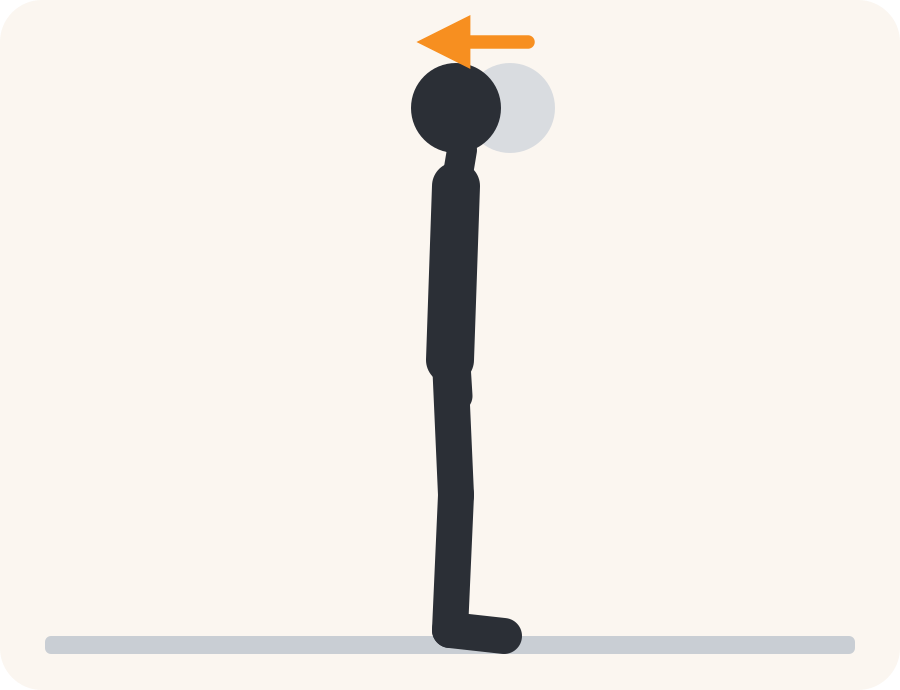
Neck exercises
Progress is scored on the Neck Disability Index.
- Chin tuck (10 reps, 5-second hold)
- Neck turn (10 per side, 3-second hold)
- Side bend (3 per side, 15-second hold)
- Shoulder blade squeeze (10 reps, 5-second hold)
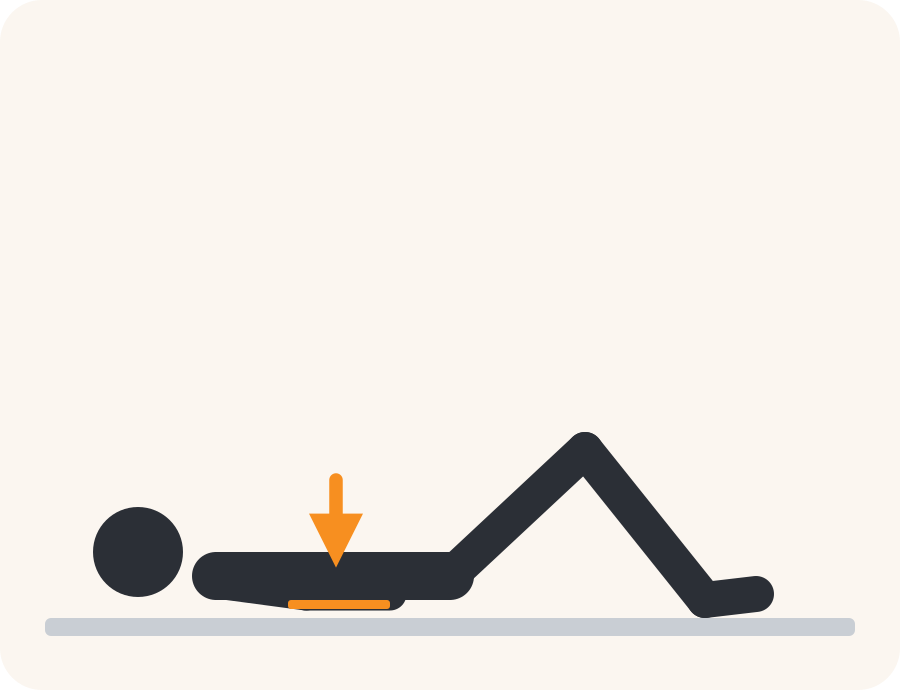
Low back exercises
Progress is scored on the Oswestry Disability Index.
- Pelvic tilt (10 reps, 5-second hold)
- Knee to chest (3 per leg, 20-second hold)
- Cat and cow (10 slow reps, no hold)
- Bridge (10 reps, 5-second hold)
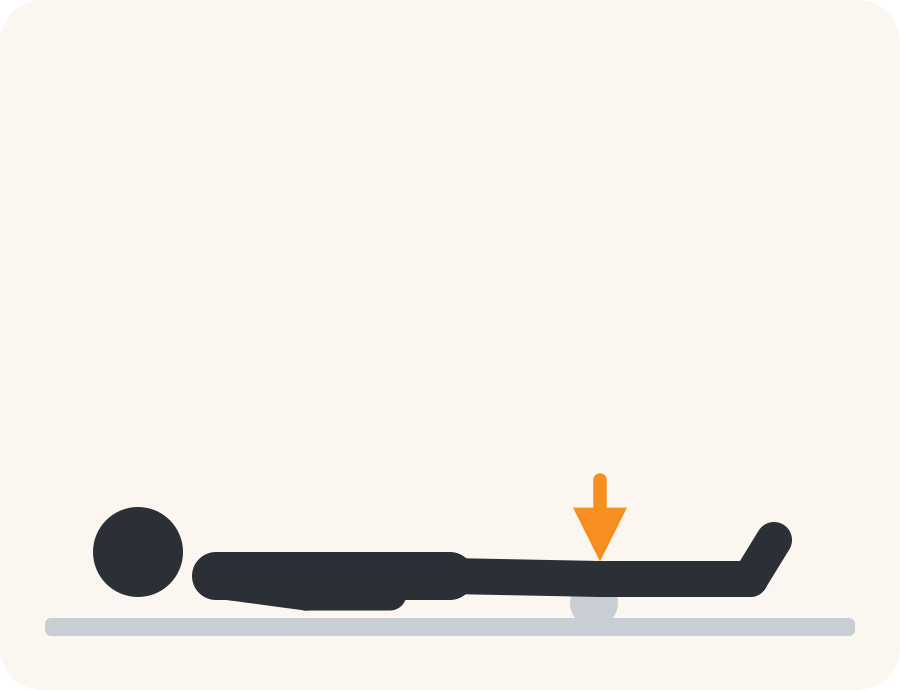
Knee exercises
Progress is scored on the Lower Extremity Functional Scale.
- Thigh squeeze, or quad set (10 reps, 5-second hold)
- Straight leg raise (10 reps, 2-second hold up top)
- Heel slide (10 slow reps)
- Sit to stand (10 controlled reps)
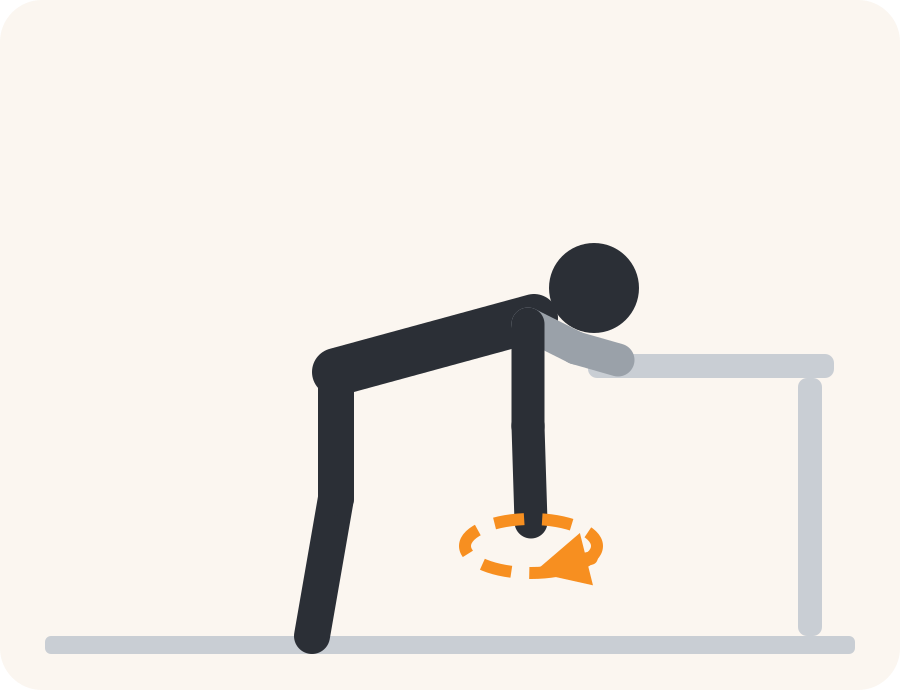
Shoulder exercises
Progress is scored on the QuickDASH.
- Pendulum (10 circles each direction, about 30 seconds)
- Wall walk (10 reps, 5-second hold up top)
- Band outward turn and band row (10 reps each, 2-second hold)
- I, Y and T raises plus the A press (10 reps each, 3-second hold)
How it is logged
The patient checks a box each time the exercises are done and writes down a pain number once a day. The log comes to every visit.
How it is checked
At each visit the technician counts the days the exercises were done and watches the patient do one of them, correcting form if needed. Both go in the note. Machines in the clinic help, but the daily work at home carries most of the recovery, so this check is not a formality.
When to stop and call
Mild soreness, a gentle stretch, or feeling a little stiff the next morning is expected. The patient stops and calls (314) 886-5461 for:
- Sharp or stabbing pain.
- Pain two points above the usual that is still there an hour later.
- Weakness, numbness or tingling that was not there before.
- Any change in vision, or dizziness.
For chest pain, fainting or difficulty breathing, the call is to 911. See when a symptom is an emergency.
What the log can and cannot show
A home log is self-report. The technician’s observation of one exercise is not; it is a direct look at whether the patient can do the movement and does it correctly. Read together, they show effort and ability better than either alone.
Missed days are information, not a verdict. Pain, a work schedule, child care or transportation all explain gaps, and the reason belongs in the note at the time, not reconstructed later. A log with no gaps over many weeks deserves the same scrutiny as one with many. The general rule on gaps is in records that survive cross-examination.
WHAT THE RECORD SHOULD SHOW
- The exercises checked by the physician.
- Logged days counted at every visit.
- One exercise watched and its form noted.
Teach-back: Before leaving, the patient does one exercise in front of the technician; the note names the exercise and how it went.
Common questions
How often are the exercises done?
Twice a day unless the physician orders otherwise. How the whole program runs is on the program hub.
Do missed exercise days hurt a claim?
Unexplained gaps get read against the patient; explained ones usually do not. See records that survive cross-examination.
Does doing the exercises well prove the patient can work?
No. It shows the patient can do those movements. Work capacity is measured by a functional capacity evaluation.
Related reading
- Physician-directed physiotherapy: what the record shows
- TENS unit, bands and braces
- Kinetisense 3D motion test
- Functional capacity evaluation
Ask what the home program record shows
Plaintiff firms, defense firms, adjusters and carriers can send the orders and visit records for review on identical terms. Patients can call about an evaluation.
12166 Natural Bridge Rd
St. Louis, MO 63044
Monday to Friday, 8:00 a.m. to 5:00 p.m. Nothing on this page is legal advice, and nothing on it is medical advice.