Physician-directed physiotherapy records
Physician-directed physiotherapy: what the record shows, visit by visit.
Physician-directed physiotherapy at this St. Louis practice is a program of heat, traction, laser, vibration, shockwave and electrical treatments that a physician examines for, orders and supervises, with no treatment started unless a physician is immediately available. Every visit is charted the same way, and progress is measured by repeating one function questionnaire at baseline and at every re-check. That makes the record checkable by either side.
This page is written for the people who read these records later: attorneys on either side, adjusters and carriers. It covers what the program is, the rule that governs every visit, what each entry should look like, and how the file shows a patient getting better, or not.
What is the program?
In the medical record, the program appears under its full name: Physician-Directed Physiotherapy Program: Neuromuscular Modality Re-Education Protocol. Each part of that name describes something a reader can check:
- Physician-directed: a physician examines the patient, signs every order and supervises each step.
- Physiotherapy: care delivered through heat, cold, light, movement, sound-wave pulses, or low electrical current.
- Neuromuscular re-education: restoring the coordination between nerve and muscle that an injury disrupted.
- Modality: each machine or method is one modality.
- Protocol: a written procedure, repeated identically at each visit.
Dr. Gurpreet Singh Padda, MD, MBA, MHP, is responsible for the program as medical director. Trained technicians run the stations exactly as ordered, and no technician works a machine alone until signed off on that machine. Technicians are not physical therapists and are never described as physical therapists. They make no diagnoses, alter no settings and add nothing to the plan; those decisions belong to the physician.
THE RULE THAT GOVERNS EVERY VISIT
Nothing is switched on until a physician is on site and free to respond at once. Without one, the patient waits. The visit record notes that a physician was available before the first station began.
From first visit to discharge
Intake
New-patient forms are completed once and entered one time, so details are not retyped and garbled.
Physician examination and orders
The physician examines the patient and signs orders naming each treatment, its settings, any tests and any equipment.
Baseline
At the first treatment visit the patient completes the function questionnaire alone, learns the home exercises, and is fitted for any ordered equipment.
Every treatment visit
Physician availability is confirmed, the safety questions are asked out loud, and the ordered stations run in order: warm up, stretch, targeted treatment, calm down.
Ordered tests
Tests are scheduled and tracked until done. A physician both runs and reports the EMG and nerve conduction studies.
Re-checks
At set points the questionnaire is repeated and the physician re-examines. The patient is discharged with a home plan, or care continues under a changed plan with the reason written down.
There is no fixed number of visits: one or two can be enough for a minor injury, while a serious one can take 60 or more across several months. The re-checks, not a calendar, decide.
How each visit is documented
- Physician available: confirmed before the first station, every visit.
- Safety screen: the questions for that day’s stations (pregnancy, implants, dizziness, new numbness, new medicines) asked aloud, answers charted.
- Each treatment: the station, the body area, the settings used and how the patient tolerated it.
- Clock times for timed services: vibration and laser are one-on-one, so the technician writes the actual start and stop times.
- One-on-one attestation: the technician attests to staying with the patient for timed services, and the patient signs the visit record confirming what was received.
- Arrival and departure times for the visit as a whole.
- Equipment: a signed receipt, entered once, for anything dispensed.
Entries like these let a reader test the record against itself. Two timed services in the same minutes, a station run on a day the patient reported dizziness, or a treatment with no order behind it are visible on the page. So is a clean record. The general standard is on records that survive cross-examination.
What treatments are in the program?
The physician decides which stations a patient gets and at what strength, and the patient can stop any of them at any time. Each box opens the record standard for that treatment.
Heat and cold therapy
Cold for new swelling, heat for stiffness. The note names which, where and for how long.
Read the record standard →Vibration therapy
A gently shaking platform that gets the small stabilizing muscles working again. Timed and one-on-one: clock times charted
Read the record standard →Traction chair therapy
A programmed stretch of the spine that starts low and never passes the ordered strength.
Read the record standard →Neck decompression
A computer-controlled pull and release of the neck, with a stop switch in hand.
Read the record standard →Laser therapy
Light energy from a Class 3B or 4 device, delivered behind a closed door with eyewear. Timed and one-on-one: clock times charted
Read the record standard →Shockwave therapy
Sound-wave pulses into a stalled tendon or muscle, once a week at most.
Read the record standard →TENS therapy
Mild current through skin pads, used as the closing step to quiet pain signals.
Read the record standard →What tests might the physician order?
Some questions need a measurement rather than an examination. Each test page says what it measures and where its limits are.
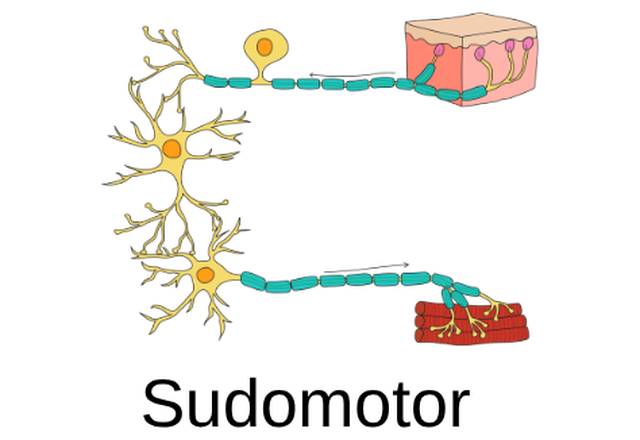
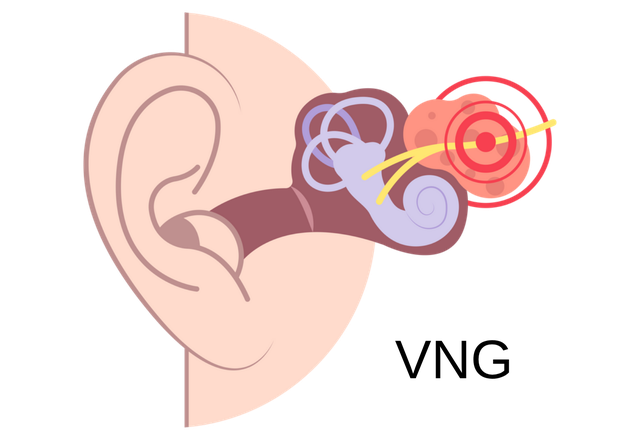
The  assessments measure circulation, nerves, balance, cognition and metabolism:





Why is food discussed at every visit?
Because the body an injury lands on shapes how it heals, a point made at length on metabolic dysfunction and injury recovery. The coaching follows a written protocol and is charted at each visit.
Diet and metabolic coaching
Walk after eating, no vegetable oils or sugar, seven hours of sleep, and an eating window, with the plan and the patient’s reports in the record.
See the protocol and the record →How is progress measured?
Because pain ratings rise and fall daily, the program also measures function: what the patient can do. At the first visit and at every re-check the patient fills out a standard questionnaire for each injured region, alone, so the answers are the patient’s own. Each box opens the home exercise program for that region.
Neck
Scored on the Neck Disability Index. Home exercises for this region are prescribed, logged and checked.
Home exercises and the log →Low back
Scored on the Oswestry Disability Index. Home exercises for this region are prescribed, logged and checked.
Home exercises and the log →Knee or leg
Scored on the Lower Extremity Functional Scale. Home exercises for this region are prescribed, logged and checked.
Home exercises and the log →Shoulder, arm or wrist
Scored on the QuickDASH. Home exercises for this region are prescribed, logged and checked.
Home exercises and the log →Each questionnaire has a minimal clinically important difference: the smallest change in score that patients experience as a real change. For the Lower Extremity Functional Scale, for example, its developers reported that figure as 9 points. A record should name the questionnaire, both scores and the threshold applied, so any reader can do the arithmetic.
How does the record show progress, or the lack of it?
- Improving past the threshold: the physician re-examines, and the patient is discharged with final scores and a home plan, or continues with a stated goal.
- Not improving past the threshold: a new plan is written with its reason. Habit is not a reason to continue; the same plan cannot simply roll forward.
- Stalled despite changes: the physician looks at other causes and options, such as diagnostic nerve blocks to find the pain source, before any talk of surgery.
A file that shows flat scores for months with the same orders repeated is a weak file for any purpose. So is one where care stopped with no final score. A file that shows measured gains, or a documented plateau followed by a change of course, reads the same way to everyone.
What do patients take home?
Most recovery happens between visits. Ordered equipment is fitted and taught with a hands-on lesson and a teach-back before the patient leaves, and the patient signs for it. Each box opens the fitting and instruction standard for that item.
Home TENS unit
Mode, time and frequency set by the physician; pad rules taught.
Fitting, lesson and record →What the record cannot show
Function questionnaires and home logs are completed by the patient. They are standardized and repeatable, which is why they are used, but they are still self-report. The measured tests on this page, and the tests on objective corroboration, are the independent part. A careful reader weighs both, and a careful clinic says which is which.
This practice is not aligned to a side. Its obligation runs to the patient’s health and safety, which is the same reason it is not beholden to any position that would keep it from seeing what is actually there. We do not offer opinions on liability, we do not accept a referral or a review conditioned on reaching a particular conclusion, and we will say plainly when the evidence does not support the claim — whichever party was hoping otherwise.
Common questions
Is physician-directed physiotherapy the same as physical therapy?
It is not. Physical therapy is a licensed physical therapist’s work. Here the physician writes and supervises the orders, and trained technicians, never titled physical therapists, carry them out. The physician’s background is on the about page.
How can a reader confirm a physician was available?
Each visit record notes it before the first station starts. If no physician is available, the visit does not happen. Contemporaneous entries like this are what records that survive cross-examination are built from.
What does it mean when the scores do not improve?
The physician revises the plan with a written reason, and may order tests to look for another pain source. Measured findings are discussed on objective corroboration.
How many visits does a patient need?
There is no set number; one or two for some, 60 or more for others, decided at the re-checks. How future care is projected from that is on life-care planning.
Can physiotherapy records be reviewed for either side?
Yes, on the same terms whoever asks. See independent case review.
Where is the program?
At 12166 Natural Bridge Rd, St. Louis, MO 63044, near Lambert Airport, Monday to Friday, 8:00 a.m. to 5:00 p.m. Call (314) 886-5461. Directions are on the location page.
Related reading
- Records that survive cross-examination
- Objective corroboration of a subjective symptom
- EMG and nerve conduction as objective evidence
- Functional capacity evaluation
- Patient terrain
Sources
- The Neck Disability Index: a study of reliability and validity (Vernon H and Mior S, Journal of Manipulative and Physiological Therapeutics, 1991). PubMed record 1834753
- The Oswestry Disability Index (Fairbank JC, Pynsent PB, Spine, 2000). PubMed record 11074683
- The Lower Extremity Functional Scale (LEFS): scale development, measurement properties, and clinical application (Binkley JM et al, Physical Therapy, 1999). PubMed record 10201543
- Development of the QuickDASH: comparison of three item-reduction approaches (Beaton DE et al, Journal of Bone and Joint Surgery (American), 2005). PubMed record 15866967
Ask what a physiotherapy file can support
Send the orders, the visit records and the function scores. We will say what they establish, what they do not, and what would settle the difference, before anyone is engaged.
12166 Natural Bridge Rd
St. Louis, MO 63044
Monday to Friday, 8:00 a.m. to 5:00 p.m. Nothing on this page is legal advice, and nothing on it is medical advice.